Pure Dead Funny: A Love Letter to Scottish Sketch Comedy Part 1
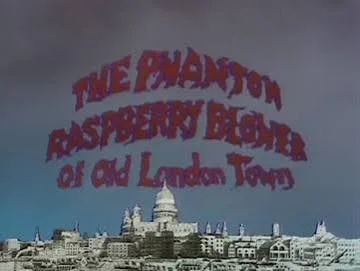
It might seem strange to start an article about Scottish sketch comedy in Victorian London, but that’s what’s happening. Before Chewin’ the Fat, before Limmy, before anyone shouted “Eleven” at a voice-activated lift, there was a man blowing raspberries at people in Victorian London. The Phantom Raspberry Blower of Old London Town, written by Spike Milligan and performed by The Two Ronnies, is the first comedy sketch I can remember watching. I was about ten, maybe younger, and a mysterious figure was terrorising the respectable citizens of London with the rudest noise imaginable, a raspberry. And with that, I was hooked. I don’t remember the plot so much as the aftermath: the next day I was running around the playground blowing raspberries and raising my blazer above my head to anyone who crossed my path. This was played out to much hilarity among my classmates. Unfortunately for my partner, this is something I still do today, but sometimes with less hilarity.
Although written by Milligan, the sketch stars one of my favourite Scottish comedy talents, the much-missed Ronnie Corbett. And looking back, the Scottish DNA was there: a daft premise played completely seriously, and a joke that gets funnier the longer it’s stretched. That’s what Scotland’s sketch writers have been doing ever since, but with more swearing, violent outbursts and jobbies.
I should say that this isn’t a definitive history of Scottish sketch comedy. Shows such as The Stanley Baxter Moving Picture Show, A Kick Up the Eighties and Scotland the What? led the way before I was born. And I’m sure I’ll leave out someone’s favourite, but these are the shows I grew up with, the ones I still quote, and the ones that made me love sketch comedy. It’s also the stuff my co-host Greg and I keep coming back to on The Culture Swally.
What makes Scottish sketch comedy different?
Ask me to define it and I’d struggle, but I know it when I see it. It’s the way an ordinary situation, such as asking if there’s any rolls, waiting for a bus or meeting your girlfriend’s uncles, can spiral into total madness and often darkness. There is a gallows humour that sits right alongside the daftness, and the trademark Scottish habit of laughing at ourselves before anyone else gets the chance.
Scottish sketch comedy often takes its time. Instead of racing to a punchline, it finds the humour in silence, long pauses and escalating desperation, a slow, painful awkwardness that pushes ordinary human frustrations to their absolute limit. You’ll see it in plenty of the sketches below.
Magic from Barker and Milligan
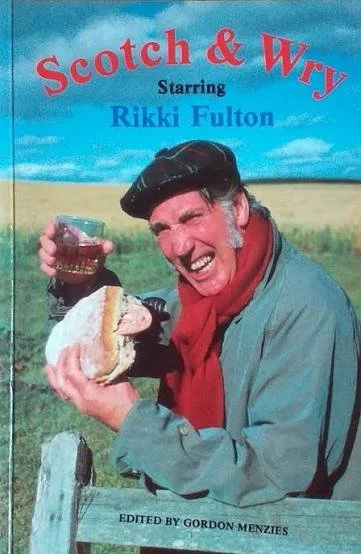
Scotch and Wry
If there’s a grandfather of Scottish sketch comedy, it’s Scotch and Wry, the BBC Scotland Hogmanay institution. It was built around Rikki Fulton, and the character most people remember is Reverend I.M. Jolly, the gloomiest minister in Scotland, whose monologues managed to be funny and bleak at the same time. Fulton also gave us Supercop, and I remember the day Mark McManus, aka Taggart himself, turned up to send up his own hard-man image. This was a crossover for the ages.
But the one that always sticks out for me was the sketch in which Gregor Fisher, playing a scout, convinces the Glasgow Rangers (RIP) manager (Fulton) to sign a standout young talent (the wonderful and dearly missed Gerard Kelly) on a five-year contract, only for it to dawn on them mid-conversation that the player is Roman Catholic. It took on one of the touchiest subjects in Scottish football and made it funny without ever softening it.
Scotch and Wry ran for two series from 1978 to 1979 and then became a top-rated annual Hogmanay special for over a decade. The VHS boxes were a fixture in many Scottish livingrooms in the 80s and early 90s and became the perfect gift for dads and (mad) uncles alike.
Naked Video
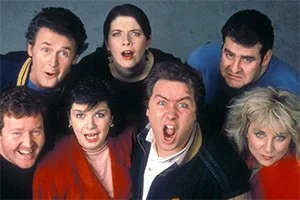
If Scotch and Wry was the Hogmanay tradition, Naked Video was the show that made sketch comedy feel like something you could watch any week. It came from BBC Scotland in the late 80s and was sharper and more modern than anything that had come before. Gregor Fisher was back, alongside Elaine C. Smith, Andy Gray, Tony Roper and Jonathan Watson. The show also gave birth to Govan’s favourite street philosopher, Rab C. Nesbitt, who started life here before getting his own series.
The sketch I still think about features Jonathan Watson and Andy Gray portraying Scotland’s favourite singing twins, The Proclaimers. With thick-rimmed glasses and acoustic guitars, the parody takes a biting look at Scottish insecurity by listing our massive historical contributions to the world and then turning it on its head, lamenting that all we can give the world now is Irn-Bru, The Krankies and Wet Wet Wet. The sketch perfectly captures Charlie and Craig’s shoutyacoustic style and fierce national pride whilst poking a bit of fun at Scotland. It’s not callous or cruel; it’s a wonderful tribute to the twins from Leith.
https://youtu.be/kLF6BeDJjlM?si=UePT9I8Nv4CUc8Gu
It’s clear at this stage that the comedy scene in Scotland kept featuring the same faces, again and again. Scottish comedy in this era felt like one big, slightly chaotic family, and Naked Video was where many of them first got properly noticed.
Chewin’ the Fat
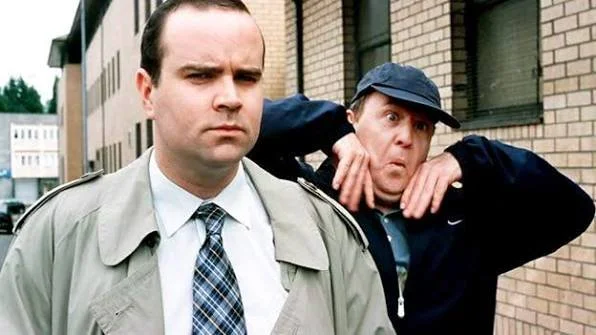
By the late 90s, Scottish sketch comedy had a new generation. Chewin’ the Fat was written by and starred, Ford Kiernan and Greg Hemphill, and it’s probably best known now for giving a platform to Jack and Victor, the lovable old men who were so popular they got their own show, Still Game.
But at the time, the standout characters I loved were the daft ones: the Invisible Boss, The Big Man, Karen Dunbar’s prudish teacher, Rab McGlinchy and Ballistic Bob. I was in my late teens and early twenties when the series aired, so I was too old to be running around the playground shouting ‘fandan!’ But you can bet your arse that Greg (Hirst, not Hemphill) and I would have been dancing our way round Espionage in Aberdeen in the early 2000s marking people as either a ‘good guy’ or a ‘wank’, and if anyone dared to say they wanted a non-alcoholic beverage they would be told in no uncertain terms to ‘Take a drink!’ I loved Chewin’ the Fat when it aired, but looking back at it now, it feels a bit light for my tastes.
It feels very much of its time: a classic catchphrase-driven sketch show with the same characters popping up each episode. But Chewin’ walked so my two favourites that followed, Burnistoun and Limmy’s Show, could run.
In fact, the geniuses behind Burnistoun, Robert Florence and Iain Connell, wrote for the show, including my favourite sketch. A man (Greg Hemphill) is desperate for the toilet and rings a doorbell, asking a stranger (Ford Kiernan) if he can use theirs. What happens next still makes me cry with laughter. When the man sits down on the toilet he realises that the bathroom door has a large, completely clear glass pane right in the middle of it. The homeowner places a wooden chair directly in front of the glass, sits down and starts to casually peel a tangerine, maintaining awkward, unwavering eye contact and then eating a segment. It’s still one of the most uncomfortable and hilarious things I’ve ever seen, and I mean that as the highest praise.
Pure Dead Funny: A Love Letter to Scottish Sketch Comedy Part 2
Limmy’s Show
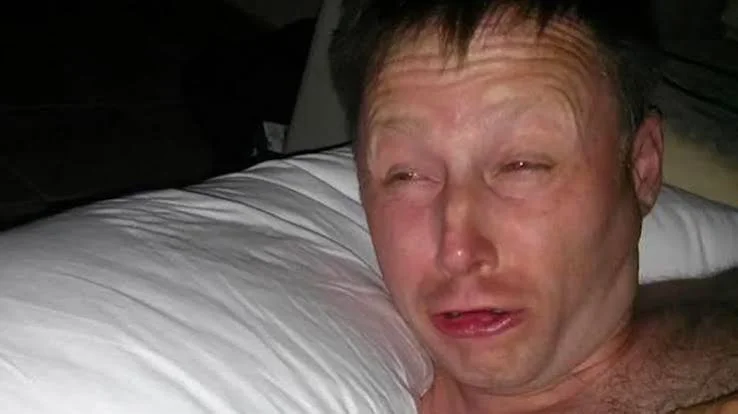
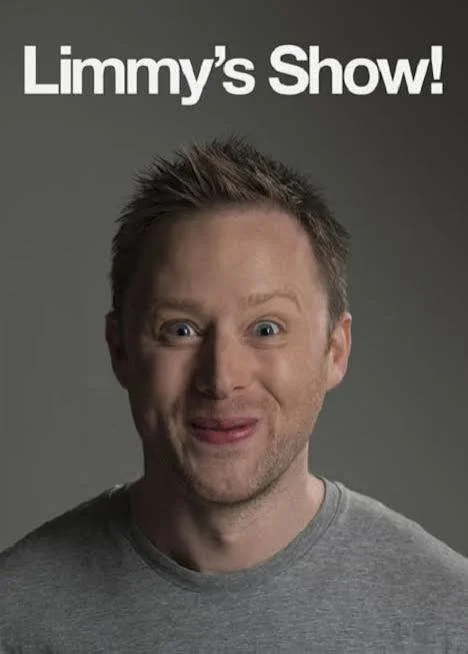
If Chewin’ the Fat was warm, Limmy’s Show was the cold shock after it. Brian Limond, a Glasgow comic who built his name online, turned sketch comedy into something stranger and darker.
The patter is still unmistakably Scottish, but the sketches drift into the surreal, the bleak and the properly uncomfortable.
Limmy takes situations we all know, like the woeful rip-off quiz channels that filled satellite TVin the early 2000s, and turns them into a character called Falconhoof. When one particular caller gets upset about a pair of winged sandals, the humour turns dark as he threatens to find out where Falconhoof drinks and do him some serious damage. When the smile fades from Falconhoof’s face and the reality of the situation sets in, the viewer who was laughing along suddenly feels uncomfortable. We are laughing at a man being threatened with violence. That’s Scottish humour for you.
What are we like, eh? What I love about Limmy’s Show is that it never explains itself. A sketch starts somewhere ordinary and ends up somewhere you can’t quite name, and you laugh before you’ve decided whether you’re allowed to. I was living in Dubai when I first watched it, and I’ve loved Limmy ever since. His comedy is so relatable and so tragic. You are often not sure why you are laughing so much.
Take Dee Dee going to Yoker. It isn’t a funny sketch as such. Dee Dee is a tragic character: isolated, chronically unemployed, a stoner who spends his days completely detached from reality. When he gets on a bus to a place he’s never been, Yoker, it seems like a simple premise.
Dee Dee experiences a sense of profound, childlike wonder as he enters this new land. Then the wonder quickly turns into intense paranoia. Terrified that he doesn’t belong and that his“cover is blown”, Dee Dee panics and runs back onto the moving bus to escape. Despite the terror, he concludes it was the best day of his life. Dee Dee is hilarious, but he also carries a layer of melancholy and pathos that sums up the gallows humour we have in Scotland.
Speaking of which…Benny Harvey, RIP. Miss you big man. Gone but not forgotten.
Burnistoun
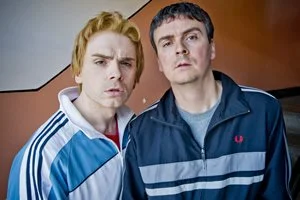
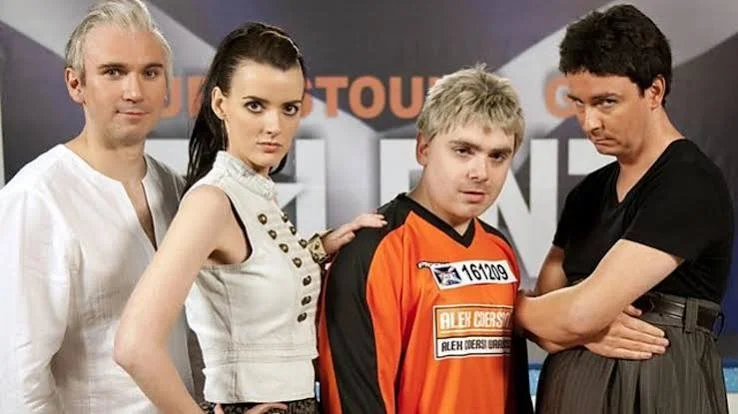
And that brings me to my absolute favourite. Burnistoun was written by, and starred, Robert Florence and Iain Connell, the same pair who had previously written for Chewin’ the Fat. It feels like the almost perfect blend of everything that went before: the warmth of Chewin’ the Fat, the surreal streak of Limmy’s Show and the patience of Scotch and Wry, with the jokes given room to build.
The sketch everyone knows is the voice-recognition lift, where two Scots get stuck in a lift that can’t understand their accents. It’s the perfect example of what I said at the start: an ordinary situation, played dead straight, sliding into total madness. I was living in Dubai when Burnistoun first aired, but thanks to the wonders of internet piracy I was able to watch each episode. I was shocked when one of my colleagues, who hailed from India, came up to me saying ‘Eleven’ and laughing about ‘the Scottish guys in the lift’. Burnistoun had gone viral.
There are so many sketches in Burnistoun that make me howl with laughter that there are far too many to list here. Just the mention of Denim Jaiskit, Nae Rolls or Two Litre Bottle of Ginger sets me off. But for some reason, the one that tickles me the most is the All My Mad Uncles sketch, in which a young man comes over to a girl’s home to take her out on a date and is forced to sit with all her ‘mad uncles’ while she gets ready. A simple premise that culminates in Connell and the young boy, stripped to their underpants, handcuffed together and fighting with spoons. You just wouldn’t get that kind of humour on The Catherine Tate Show or Harry Enfield and Chums. But that’s what makes Scottish comedy so unique.
The Best of the Rest
There are, of course, a few other Scottish sketch shows that deserve a mention. “Absolutely” was the Channel 4 sketch show with a cast of mostly Scottish comics, including Moray Hunter, Jack Docherty and Gordon Kennedy, and it was a lot more surreal than what BBC Scotland was offering at the time. I plan to pick “Absolutely” as an episode topic in 2027, and I’m sure Greg and I will laugh at the antics of Stoneybridge Town Council and debate whether McGlashan’s hatred of the English holds up now or just comes across as a bit homophobic.
(I’m thinking mainly of the sketch where he cycles across the border just to shout a word that questions the sexual preferences of a nation.)
https://www.youtube.com/watch?v=K5cUxawA_6w
We covered the wonderful Only an Excuse? back in 2023 on the podcast. The Jonathan Watsonvehicle ran from 1993 to 2020 and was broadcast every Hogmanay, poking fun at the good and the great of Scottish football. Parodies and impressions of major figures like Sir Alex Ferguson, Graeme Souness, Kenny Dalglish and my favourite, Frank McAvennie, made the show appointment viewing every 31st of December (or, latterly, the 1st of January while still drunk from the night before).
Scot Squad took the mockumentary route, following a fictional unified Scottish police force. Starring Jack Docherty as Chief Commissioner Cameron Miekelson, the show satirised modern policing, bureaucracy and quirky public disturbances across Scotland. The scene where Bobby Muir, played by Darren Connell, visits the station to complain that he thought he was going for an Indian head massage but had instead received a colonic irrigation, and that bits of carpet and Lego had come out of his bum, will never fail to make me howl with laughter.
And then there’s Queen of the New Year, written by and starring Greg Hemphill from Chewin’ the Fat and Robert Florence from Burnistoun. It made its debut in 2021 and has been a fixture on Hogmanay for the last five years. Aided by a great cast including Barbara Rafferty, Stephen Buchanan and Chris Toal, the show pokes fun at the previous year. As a huge fan of Rab Florence and Greg Hemphill, I was really looking forward to it when it first aired, and I have watched it every year. I think it’s best if I leave it at that and let you form your own opinions of the show. It has its moments, but fails to hit the heights it should for me.
Still blowing raspberries, I am no longer a wee boy running around a playground in Aberdeen; I’m a 45-year-old man living in Amsterdam, yet I still quote these shows almost daily. Somewhere between a Victorian phantom and a lift that can’t understand Scottish accents, I worked out what I love about all of it: it takes something small and daft, plays it dead straight, and lets it run.
Sketch comedy hasn’t died, it’s just moved online, and with the wonderful Larry Dean in the cast of Saturday Night Live UK, Scotland’s still in the room. If it gets a new generation back to being really fucking stupid and mucking around, I’m all for it.